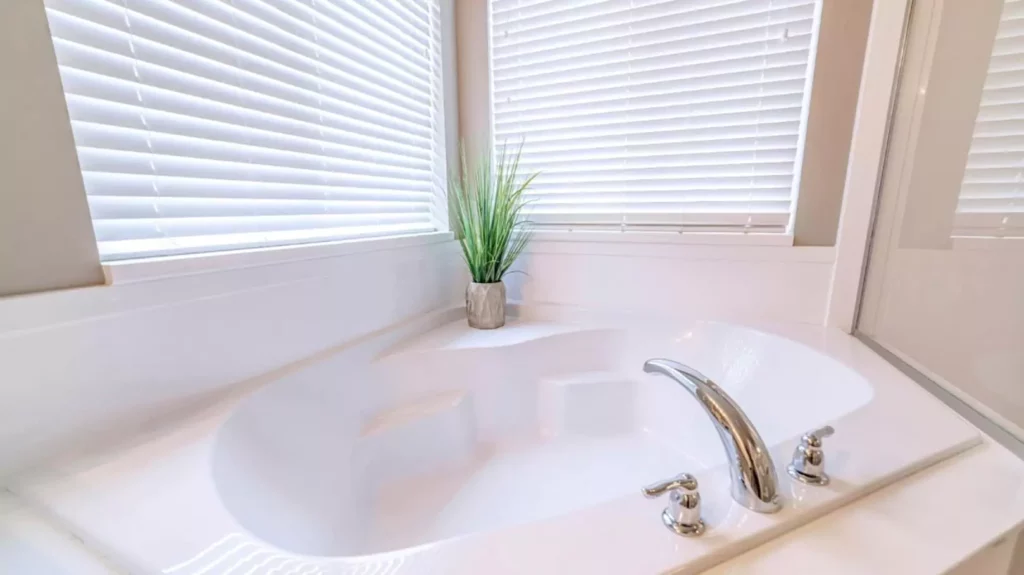
Although not the first element that often comes to mind when considering bathroom decor, window blinds are an incredibly important component in any room. Offering custom light and privacy control, blinds in NZ also add a stylish element to tie in your bathroom décor or serve as the centrepiece of attention.
However, unlike blinds for other rooms in your home, bathroom blinds must feature heat and moisture-resistant properties to suit and withstand the humid environment. We discuss what blinds are best for bathrooms and other factors you should consider.
Your bathroom is the most vulnerable and freeing area of a home and requires high privacy to unwind and feel comfortable. The best blinds for bathrooms should be:
Not all blinds are suited to humid environments. These options tend to perform best in bathrooms.
Venetian blinds are one of the most reliable choices for bathrooms, particularly when made from aluminium or PVC. They are:
Unlike timber blinds, aluminium and PVC versions won’t warp or crack when exposed to humidity. This makes them ideal for bathrooms, laundries, and kitchens.
They also give you flexibility. You can tilt the slats to let light in while maintaining privacy, which is especially useful in street-facing bathrooms.
Roller blinds are another practical option, provided you choose the right fabric. Modern roller blinds can be made with moisture-resistant coatings, making them suitable for bathroom use. They offer:
For bathrooms that need more natural light, sunscreen roller blinds can be used to filter light while still maintaining a level of privacy. However, it’s important to avoid untreated or absorbent fabrics, as these can hold moisture and lead to mould over time.
PVC shutter blinds are a durable alternative to blinds and work particularly well in bathrooms. They are designed to:
The adjustable louvres allow you to control both light and airflow, and because they are fixed in place, they don’t move around like fabric blinds. Shutters tend to suit bathrooms where you want a more structured, long-term solution rather than a softer window covering.
Some materials are not well suited to bathroom environments. Avoid:
These options may look good initially but often don’t hold up well in humid conditions.
Even the best blinds will last longer with proper ventilation. Simple habits can help:
Reducing humidity levels helps prevent mould and keeps your window coverings in good condition.
Bathrooms often need both privacy and natural light at the same time. Blinds that allow partial adjustment, like Venetian blinds or light-filtering roller blinds, are useful because they let you:
This balance is especially important in smaller bathrooms where natural light can make the space feel larger.
The best choice depends on your bathroom layout, window size, and how much ventilation the space has. For example, in many Auckland homes, where humidity levels can vary, moisture-resistant materials are essential for long-term durability.
If your bathroom has limited airflow, prioritising PVC or aluminium options will usually give better results over time.
Choosing the right blinds for your bathroom improves both functionality and appearance. The right option will:
If you’re unsure which solution will work best, you can book a free measure and quote to get advice tailored to your space.