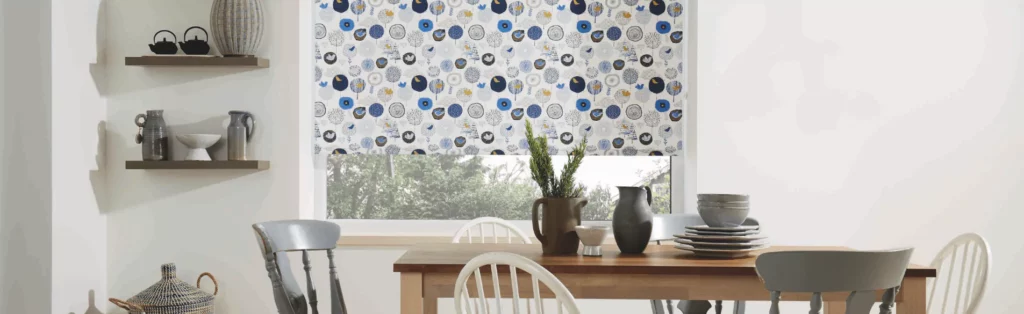
The window covering industry underwent a major safety overhaul in the mid-90s. Before then, window blind cords had no built-in safety stops, and several children had been injured by strangulation due to window blind cords. New safety requirements were passed which required corded blinds and shades to be redesigned with built-in child-safety features.
Roller blind cord safety is much easier for parents to address today, with modern products like cordless blinds delivering an array of stylish solutions without the worry of dangerous dangling cords. Alternatively, you can easily childproof existing blinds and shades with inexpensive blind cord cleats, cord wraps, or breakaway tassels, and there are several ways to childproof unsafe blind cords without purchasing new products.
Here, we have some great safety tips on how to childproof existing blinds, and an overview of the many choices in cordless blinds and shades.
Probably the simplest blind cord safety fix for standard blinds with pull cords, is the installation of blind cord cleats. These are simple and effective, allowing allow pull cords to be secured safely out of reach. However, they should be used in conjunction with a safety tassel just in case someone is in a hurry, and the cord is not wound up properly.
Another blind cord safety device made to child proof blinds are cord wraps and cord roll-ups. These retractable devices are made to neatly secure blind cords out of reach. Safety-wise, they’re as effective as blind cord anchors but look tidier and don’t require installation into window frames.
It’s also worth mentioning that the blind cord safety tassel (the plastic thimble-like piece at the end of the blind pull cord) can also pose a hazard. If multiple blind control cords are connected with one tassel, it creates a dangerous loop. This is actually one of the major safety hazards that drove the changes within the industry. Luckily, it’s an easy fix. Simply replace the single tassel with a breakaway tassel, or multiple cord tassels. This eliminates the dangerous cord loop.
If you want to eliminate the danger altogether, this is the option for you. Cordless blinds are stylish, safe, and easy to use, and they come in a large variety of styles and colours. It’s no wonder cordless blinds are trending as the window treatment of choice for many homeowners today.
Cordless blinds do not use external cords to function, so children and pets cannot become entangled in them, making them safer by design. This is why many people agree that cordless blinds are the right choice for your windows if you have small children in the home.
Cordless blinds and shades are available in every style imaginable, and many are surprisingly inexpensive. If you’re in the market for new window coverings, it’s easy to avoid the blind cord safety issue altogether.
If you’re planning to upgrade your window coverings, you can explore options like our motorised blinds Auckland which combine safety with convenience and modern design.
It seems that the most effective option to childproof windows in your home is to lock all of them. Nowadays, you can find window locks for every kind of window, and most contemporary models have built-in locks with keys.
Another option is to install wedge-like plastic window stoppers in your windows, including sliding, single-hung, and double-hung ones. These convenient triangular-shaped devices will prevent windows from opening more than 4 inches (10 cm). You can find them in the local hardware store, or order them online. There are a couple of different kinds of window stoppers, but they all basically limit the distance a window can open. Hence, this is a great option for opening the windows just a little bit—four inches at most.
Childproofing your windows and blinds doesn’t have to be complicated. By taking these simple steps you can significantly reduce risks and create a safer environment for your family.
If you’re unsure where to start, getting professional advice can make the process easier. You can book a consultation or showroom visit to explore safe, modern window furnishing options tailored to your home.